NBRS: from sales brochure to a brand-led website for a design practice founded in 1968
NBRS is an Australian design practice of around 80 people working across architecture, interiors, landscape and heritage, with studios in Sydney and Melbourne. Its purpose is to create life-changing environments, but its website had drifted into a sales brochure: project scale and specifications, with little of why the practice does the work. I led the move to a brand-led site with sharper messaging, and filmed the leadership team so the brand had faces and voices, then cut those interviews into social clips.
Leaders interviewed on camera
Pages in the new structure
Research papers brought in-house
Projects and articles migrated
Scope figures from the project. The new site launched in September 2026.
The brief
NBRS has been designing schools, hospitals, justice facilities, churches and heritage buildings since 1968, and it sees architecture as social: every project is judged on whether it helps the people who use it. The brief named the problem plainly. The website had lost the emotional amplification of the brand, its why, and had settled into describing the design and scale of each project.
Most competitor sites in the sector read the same way, a list of services and a wall of awards. NBRS wanted to stand apart by talking about people and outcomes instead, and set one test for the whole site: a visitor should leave believing NBRS is interested in them and their objectives, not reading a brag about NBRS. It was not a call for a ground-up redesign, but for the brand essence to come through.
Messaging and structure
The new voice moved from a warm, first-person we to a confident third person, with the practice as the subject: NBRS designs, rather than we strive. Five tone pillars kept it human: warmly insightful, purposefully positive, grounded expertise, culturally attuned and collaboratively curious. Phrases like we believe and we are proud came out, because they read as promotion.
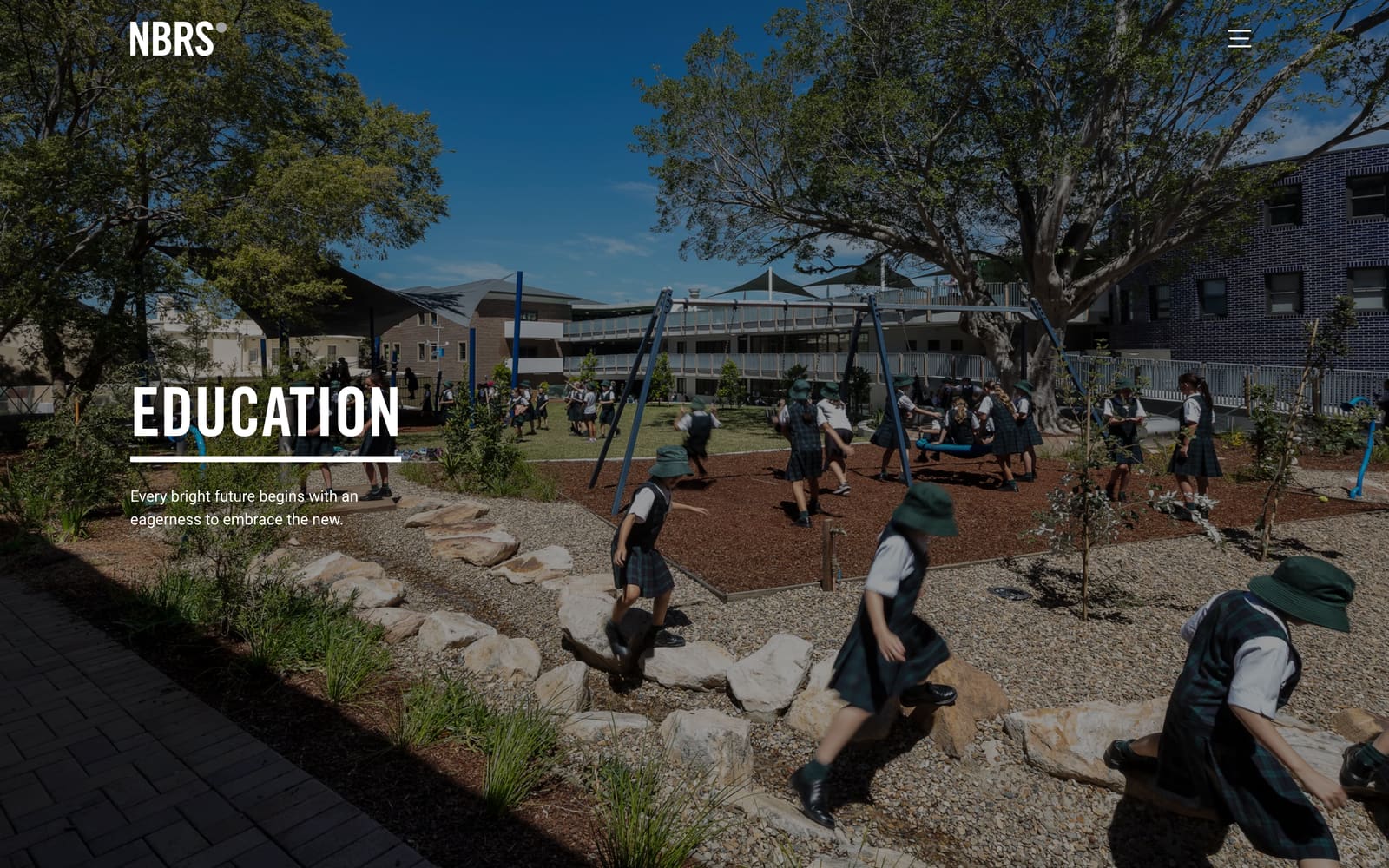
Structure followed the same golden thread, from brand to story to people, expertise, design and research. The site became 31 pages under Purpose, People, Sectors, Practices, Projects and News, with projects filterable by sector and discipline. Who NBRS is now sits one click from the homepage, and each sector page opens with the people a building serves rather than the building itself.
Design
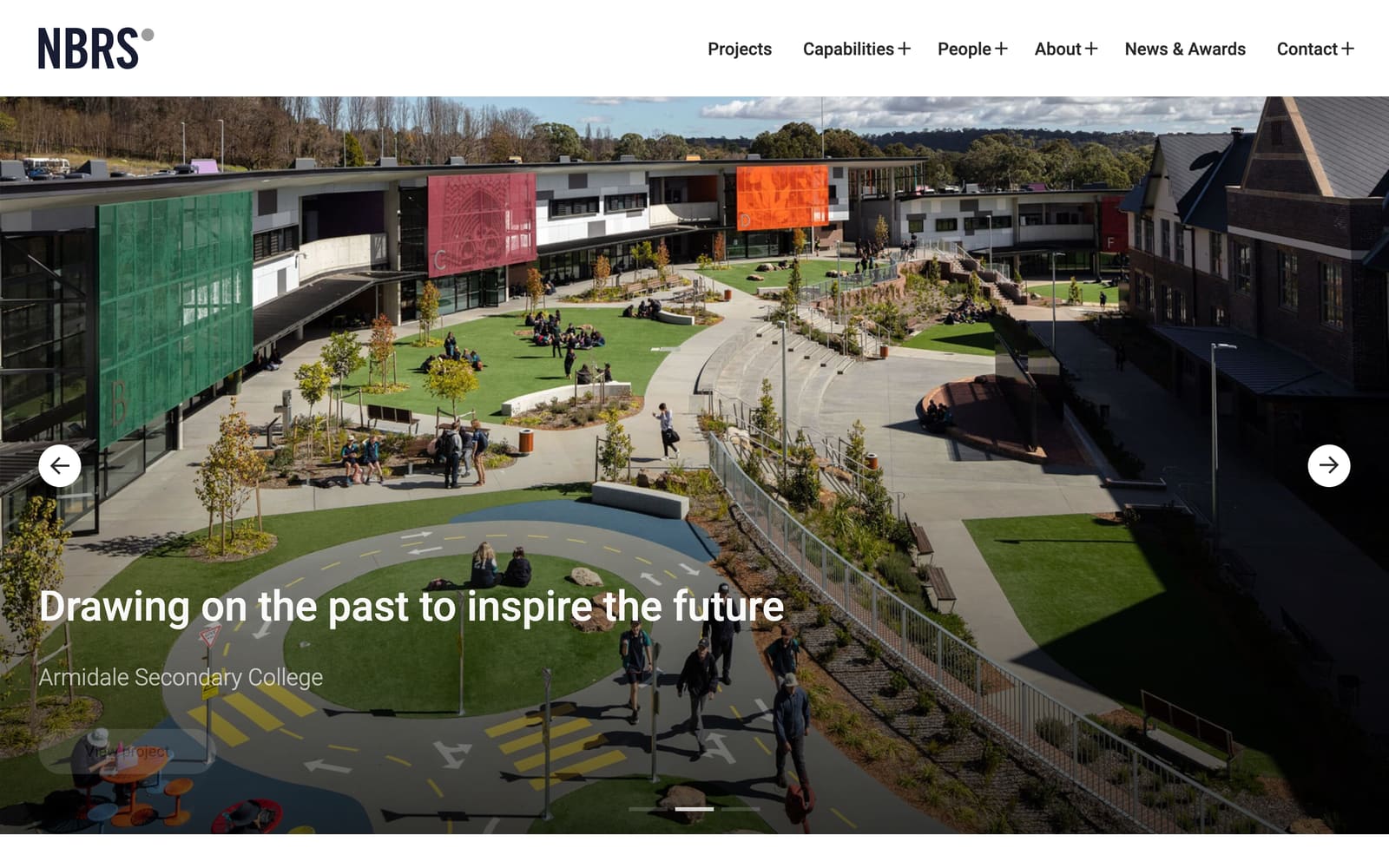
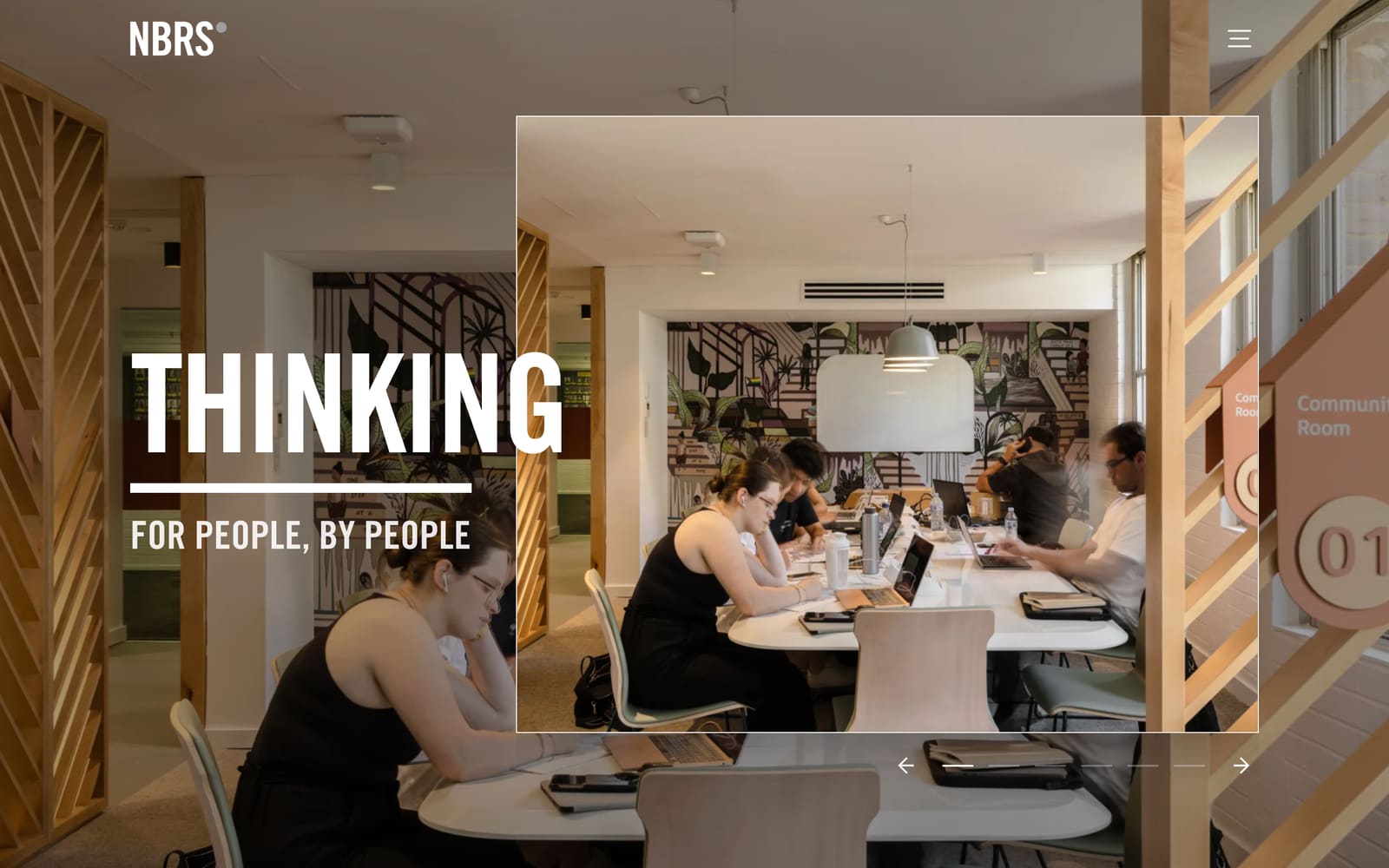
I set the design direction and ran every review round with the leadership team, working with a contract UI designer in Figma. The homepage hero puts people at the centre of each project photo, project pages moved to a quieter, gallery-like layout so the photography carries the story, and images handle both portrait and landscape with focal points so subjects are not cropped out on mobile.
Research, brought home
NBRS publishes serious research on learning environments, mental health spaces, aged care, workplaces and heritage. It used to live on Issuu, linked from the footer like a social channel, which meant the practice's best thinking was earning search visibility for someone else's domain.
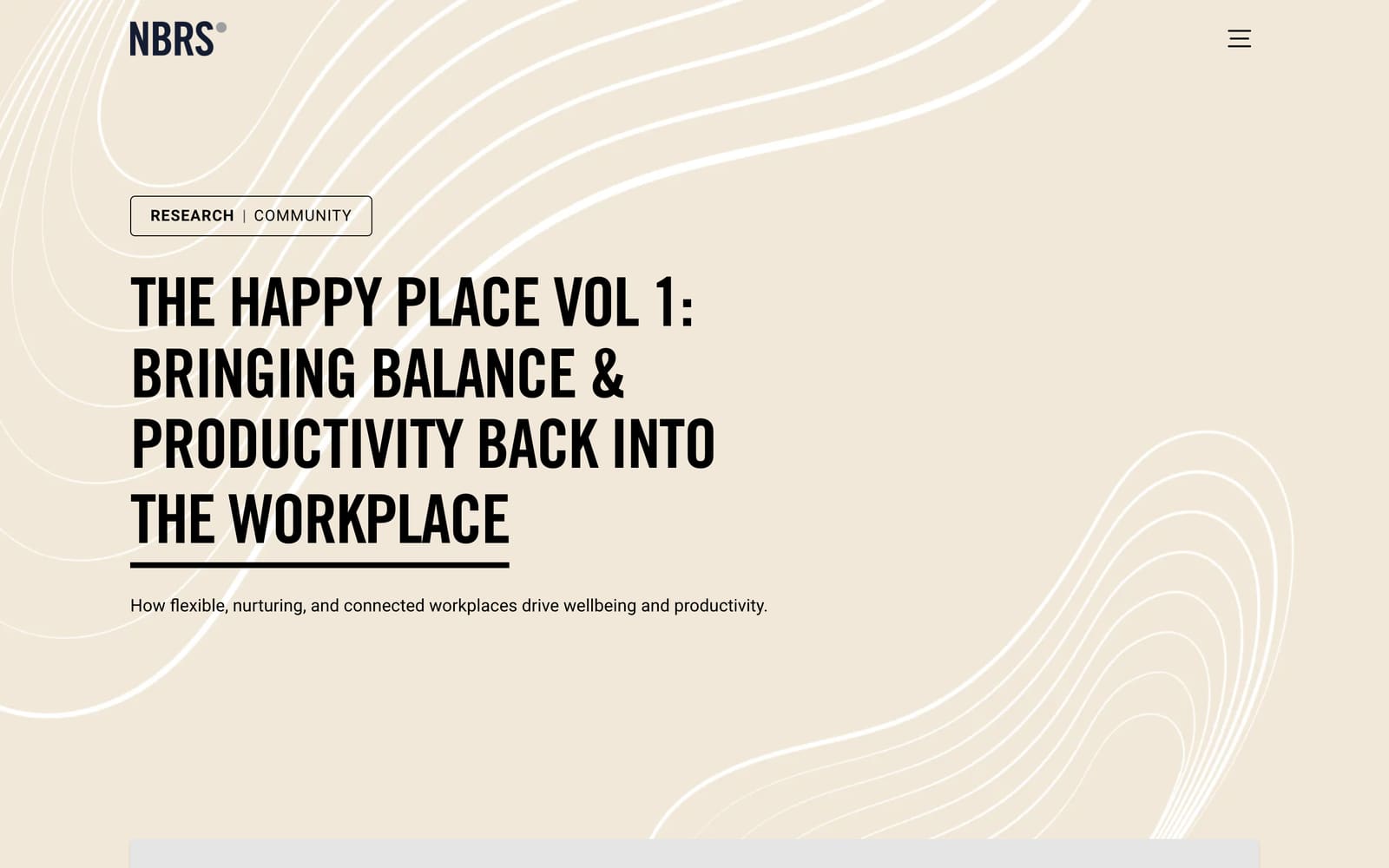
We brought 20 research papers onto the NBRS site as self-hosted PDFs inside a filterable research hub. Each paper has its own intro page with an insight snapshot, key takeaways, the download and related insights. Those pages give Google and AI answer engines something to index and cite, and give a reader a reason to download.
Platform and build
The previous build was hard to edit and poorly documented. I assessed the options and recommended keeping Craft CMS as the content store, upgraded from version 3 to 5, with a coded front end in GitHub deployed on Vercel. Editors keep a familiar CMS with drafts, permissions and focal-point cropping, and the front end is a reusable component library that is fast to extend.
I scoped and managed the build with a development partner, mapped every old URL to its new home with redirects, rewrote the SEO titles and descriptions, and ran QA through to launch in September 2026.
Leadership video
Architecture practices are hired on trust in their people, so the brand needed faces and voices, not just buildings. I wrote the interview questions and directed a day at the Sydney studio, interviewing six members of the leadership team on camera about why they design the way they do. The same day produced more than 2,000 photos of the studio and the team.
The interviews were filmed and edited with Content Department and cut into short social clips for LinkedIn and Instagram, so each leader can speak to their own sector. A few of them are below.